--- Elizabeth Peters, Summer of the Dragon
It's Minnesota in my case rather than Ohio, but the quote reflects my feelings perfectly otherwise. I went west knowing already that the mountains spoke to me, and that the wide open country made me feel alive like nowhere else I'd been. The desert though was a wholly new experience for me---it's a world of sun and parched earth, winding arroyos and dead volcanoes. It's empty and austere and yet unbelievably beautiful. I did not expect to fall in love, but I did.
When I woke up that morning in Cortez, my thoughts were focused on our upcoming sojourn to the Four Corners monument and the trading post in Teec Nos Pos. Having read a few of Tony Hillerman's Leaphorn and Chee mysteries,* I was also eager to see the Navajo Reservation and the landscape there that is as much a character in the books as the people.
Towns and gas stations are few and far between on the rez, so we filled up on the way out of Cortez. I somehow managed to lose my little silver snake ring while doing so, and given Navajo taboos about snakes, in retrospect, I suppose that was fitting. I was annoyed at the time, but I ended up with a pretty amazing replacement for it by the end of the day.
Heading south out of Cortez


Parched earth
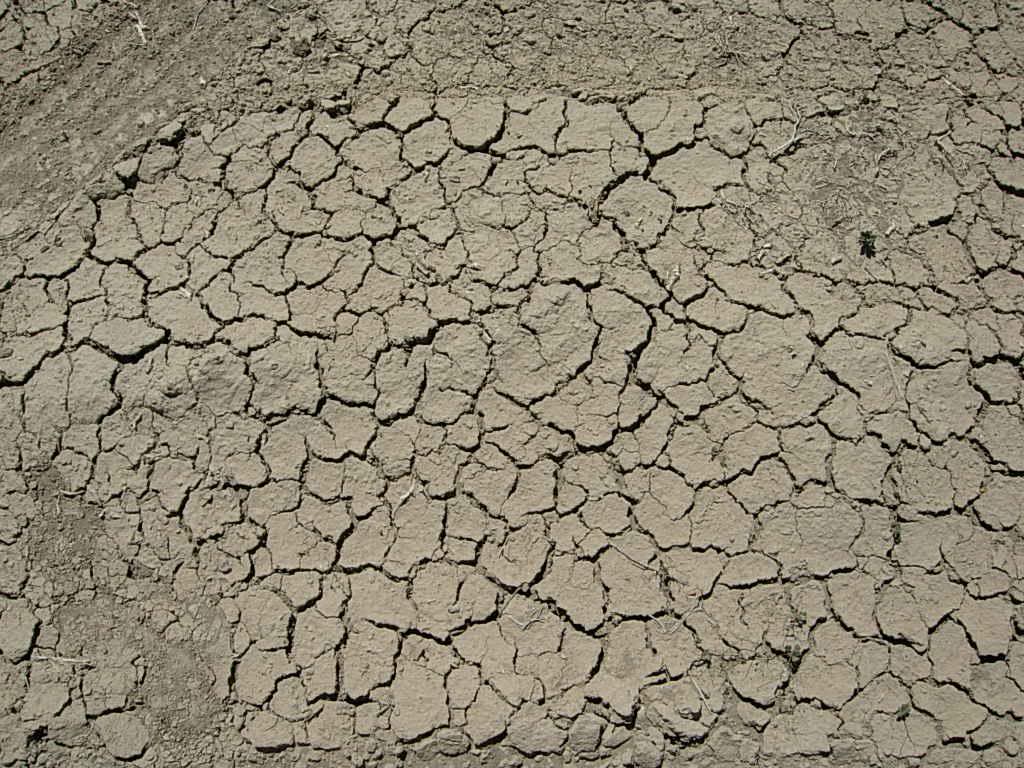
Winding arroyos, the result of heavy summer rains and flash floods

We realized we would not have time to get to both Ship Rock (New Mexico) and Teec Nos Pos (Arizona) that day, so at the fork in the road, we opted for the latter. The allure of turquoise was too strong. Nonetheless, I managed to get some shots of the great cathedral spires rising up from the desert floor some eight or ten miles distant. Ship Rock is the molten core of a long dead volcano, the outer shell of which has eroded away over the millennia. It doesn't look particularly ship-like to me though. The Navajo call it Tsé Bitʼaʼí, the "rock with wings." It is a sacred place and central to several important stories in their mythology, chiefly how Monster Slayer, one of the Warrior Twins, earned his title.

More stunning scenery


As you can see, the terrain changes a bit with every hill and turn in the road. No photo can really convey the vastness of the sky overhead or the broad panorama of the mountains and low plains, but I tried. Because we were there in late May, the area was relatively green from spring melt water, but even the drier places were breathtakingly beautiful. Something about this landscape gets under your skin and into your soul, and like Elizabeth Peters wrote, it draws you back again and again. I had only a taste, a few short hours, but there's no cure, and I wouldn't want one anyway.
When we reached Four Corners, we found this...

So we didn't get to take any silly photos of ourselves sprawled across 4 states, and I didn't get to add Utah to my list of States I Have Visited. Bummer. Still, the drive further south to Teec Nos Pos did provide more wild horse sightings.

Welcome to Dinetah!

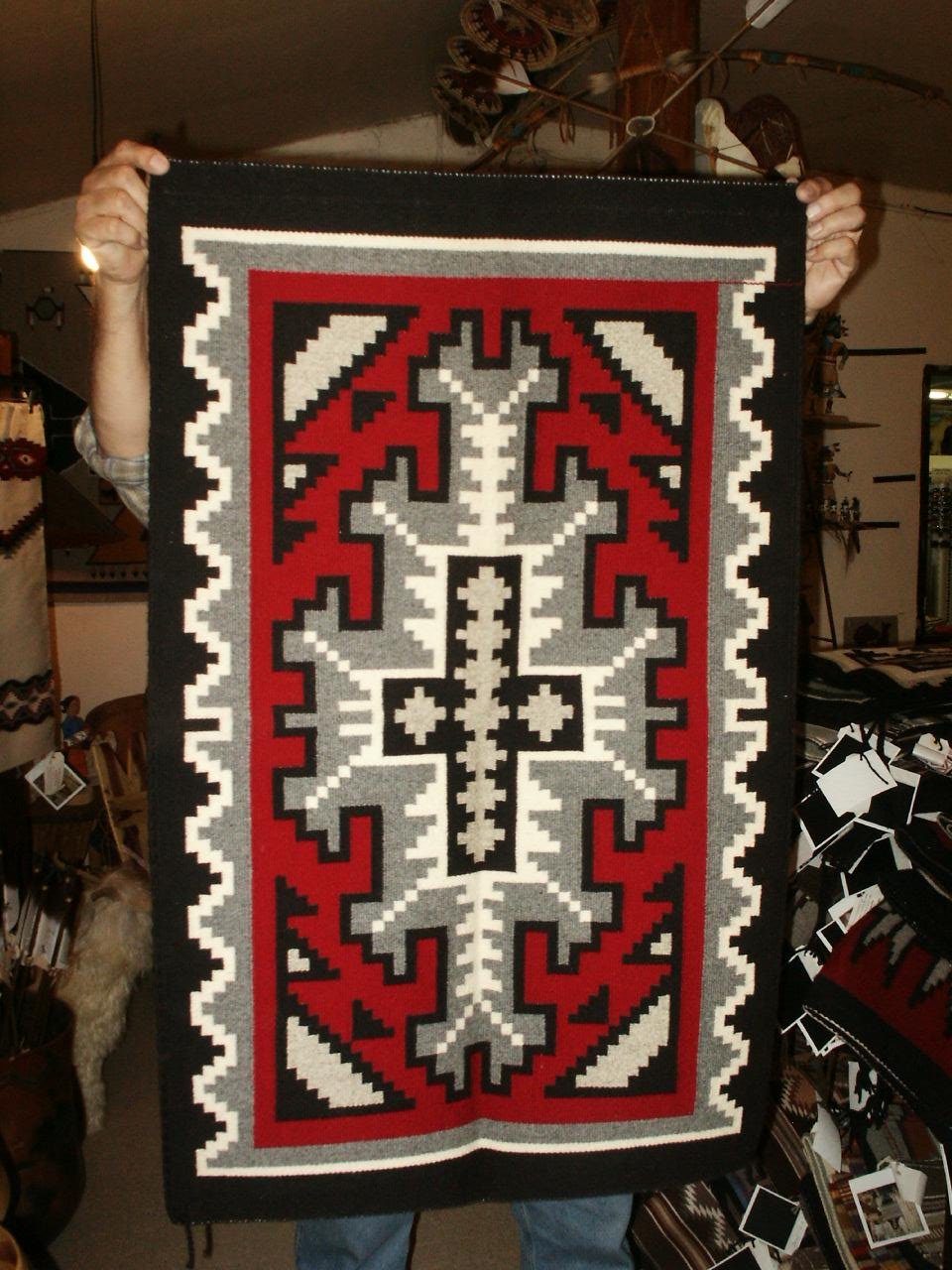
The crossroads at Teec Nos Pos (pronounced "tease nahs pahs" (I've been saying it wrong, too)) consist of a trading post, a gas station, and a few scattered small buildings. The trading post, built in 1905, serves as both a general store and a gallery of Native American art, primarily Navajo rugs, jewelry, pottery, and baskets. There are similar trading posts dotted around the southwest, but this was the first one we visited. Talk about mind blowing! There were several long glass cases full of thousands of pieces of jewelry, and there was a whole room filled to bursting with rugs.


A few of the rugs I found particularly stunning

Despite many temptations, we held off on buying anything, knowing that the delights of Durango, Silverton, and Ouray still awaited us. We drove back north to Cortez, planning to continue on to Telluride, but made a last minute stop at the Notah Dineh Trading Company and Museum on the west side of town.There, we did succumb to the siren call of turquoise and silver, and we were so entranced that we never made it downstairs to the museum, so I will just have to go back there, too. Convenient, huh?
My loot, a Navajo needle point bracelet by Corbet Joe. (Needle point is traditionally a Zuni style, but many Navajo now work in that style as well.)

And an inlaid Zuni ring by unknown artists "DE-CM"

(This was the point in my life where I lost control in terms of Native jewelry. I'm sitting pretty, literally, at around 75 pieces now...)
As with most everywhere in the southwest, the countryside becomes
greener as the elevation rises, and the road north out of Cortez is no
different. We left the desert in just a few short miles, returning to
the temperate forest that covers much of the Rockies. The first town we
reached was Dolores, a former railroad town like so many in the area. A replica of the old Dolores depot houses a small museum there devoted to the Rio Grande Southern Railroad, and out in front sits one of the most unique vehicles to ride the rails, a Galloping Goose. The Geese were powered by combustion engines rather than steam engines, and they were therefore less expensive to operate, especially for light mail or passenger runs. Only seven were built, and of that number, six survive. All six are still operational. Number five is on display in Dolores.


The Navajo have a saying that "Coyote is always out there waiting, and Coyote is always hungry." He is a complex figure in Navajo mythology, both a trickster and trouble maker but also a character of perverse whimsy and unexpected beneficence. It is said that if a coyote crosses your path while on a journey, you should turn back or some terrible event will transpire. Near the small town of Rico, we came upon a coyote sitting by the side of the road, bold as brass, just watching the cars go by. He was content to let us pass, and no ill luck befell us. But he did serve as a reminder that Coyote is always waiting.
As we climbed higher in to the San Juans, we came to Lizard Head Pass (elevation 10,222 feet). The snowmelt stream in the meadow below is part of the headwaters of the Dolores River.

Lizard Head Peak (elevation 13,113 feet)

Trout Lake

The town of Telluride. (It was too upscale touristy for my taste.)

Telluride sits in a box canyon, so there is no way out from the back of the canyon other than up the winding switchback seen here behind the old Pandora Mine.

Bridal Veil Falls and the power plant that helps provide electricity to the town


More CO sculpture outside the gas station in Telluride, these of the whimsical variety.


Back on the road---Sunshine Mountain. I will never tire of these mountain views.


Following the Dolores River back down toward Cortez

Old mining ruins

A marvelous rat tail Appaloosa spotted near Dolores

Our final destination for the day was Durango, and our hotel rooms looked out over the lovely Animas River. There's a pretty bike and pedestrian path all along the river front.

Next time---more steam engines, more jewelry, more incredible mountain scenery!